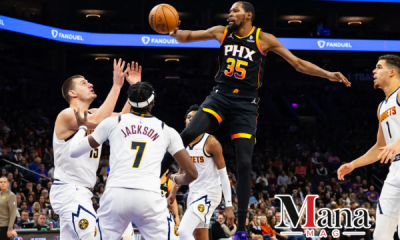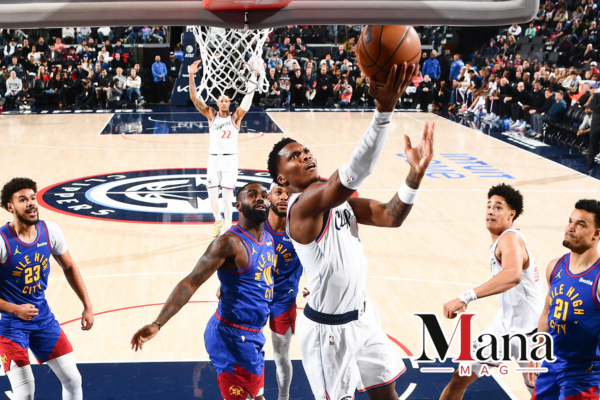
The Denver Nuggets defeated the Los Angeles Clippers 122-109 on January 30, 2026, at Ball Arena in Denver. Nikola Jokic made his return from a 16-game absence and delivered 31 points, 12 rebounds, 5 assists, and 3 steals in only 25 minutes. Tim Hardaway Jr. scored 22 points, Jamal Murray added 20 points with 9 assists, and Peyton Watson finished with 21 points.
For the Clippers, James Harden led the way with 25 points and 9 assists. Kawhi Leonard added 21 points, while John Collins scored 18. Ivica Zubac finished with 13 points and 7 rebounds.
The final margin was 13 points, but the box score tells a fuller story. Denver shot 55% from the field and 57% from three-point range, while Los Angeles shot 47% overall and 35% from deep. The Nuggets also controlled the rebounding battle 43-34 and made 26 free throws compared with 15 for the Clippers.
Clippers vs Nuggets Match Overview
The matchup brought together two Western Conference teams entering the game with very different recent stories.
Denver entered the contest at 33-16, while Los Angeles stood at 22-25. The Clippers had won 16 of their previous 19 games, giving the matchup plenty of attention before tipoff. Denver also had a major storyline of its own because Jokic was returning after missing 16 games with a knee injury.
Jokic did not need a long adjustment period.
Despite a minutes restriction, the three-time MVP produced one of the most productive short appearances of the season. His 31-point, 12-rebound, 5-assist line came from 8-of-11 shooting, along with 13 made free throws from 17 attempts.
Final Score
Denver Nuggets: 122
Los Angeles Clippers: 109
Venue: Ball Arena, Denver, Colorado
Date: January 30, 2026
The Nuggets led after every quarter and never gave Los Angeles a chance to take control.
Score by Quarter
| Quarter | Clippers | Nuggets |
| 1st | 27 | 35 |
| 2nd | 23 | 24 |
| 3rd | 30 | 33 |
| 4th | 29 | 30 |
| Final | 109 | 122 |
Denver built an eight-point lead during the opening period and added another point to the margin before halftime.
Los Angeles did produce 30 points in the third quarter and 29 in the fourth, but Denver continued scoring at a steady rate. The Nuggets finished with 33 points in the third and 30 in the final period.
The game never turned into a one-quarter blowout. Denver simply kept enough control throughout the night to protect the lead.
Denver Nuggets Player Stats
Denver’s scoring was spread across several players, with Jokic providing the headline performance.
| Player | MIN | PTS | REB | AST | FG | 3PT | FT | STL | BLK |
| Nikola Jokic | 25 | 31 | 12 | 5 | 8-11 | 2-3 | 13-17 | 3 | 0 |
| Jamal Murray | 36 | 20 | 4 | 9 | 7-10 | 4-5 | 2-2 | 1 | 0 |
| Peyton Watson | 35 | 21 | 4 | 3 | 9-17 | 2-5 | 1-2 | 0 | 0 |
| Tim Hardaway Jr. | 25 | 22 | 2 | 0 | 6-9 | 5-7 | 5-5 | 0 | 0 |
| Bruce Brown | 26 | 6 | 2 | 3 | 1-3 | 1-2 | 3-3 | 1 | 0 |
| Jonas Valanciunas | 21 | 11 | 6 | 2 | 5-11 | 0-0 | 1-1 | 0 | 2 |
The official box score lists Denver at 40-for-73 from the field, 16-for-28 from three, and 26-for-32 from the free-throw line.
Nikola Jokic Returns With 31 Points
Jokic was the clear statistical headline.
He scored 31 points, collected 12 rebounds, handed out 5 assists, and recorded 3 steals. He made 8 of 11 field-goal attempts, showing strong efficiency during his limited time on the floor.
The 25-minute restriction makes the performance even more striking.
Jokic missed 16 games after suffering a hyperextended left knee on December 29. Denver went 10-6 during his absence. His return gave the Nuggets another primary scorer and passer without requiring a full workload.
Jokic also scored 11 points during a 3:47 stretch in the fourth quarter. That scoring burst helped Denver turn a five-point lead into a 16-point advantage.
Jamal Murray Ran the Offense
Murray finished with 20 points, 4 rebounds, and 9 assists.
His shooting was excellent. He went 7-for-10 from the field and 4-for-5 from three-point range. His nine assists led Denver and gave the Nuggets another reliable ball handler alongside Jokic.
Murray’s four made three-pointers also helped Denver stretch the Clippers’ defense.
Los Angeles had to account for Jokic inside and Murray outside. That combination created room for Denver’s other scorers.
Tim Hardaway Jr. Caught Fire From Three
Hardaway Jr. scored 22 points in 25 minutes.
His shooting line stood out most. He made 6 of 9 field goals, including 5 of 7 three-pointers. He also made all five free-throw attempts.
Five three-pointers from one player gave Denver another perimeter weapon. Los Angeles could not focus exclusively on Jokic and Murray.
Peyton Watson Added 21 Points
Watson produced 21 points on 9-of-17 shooting.
He also recorded 4 rebounds and 3 assists. His 21 points gave Denver a fourth player with at least 20 points.
That balance mattered. The Clippers could not concentrate their defensive attention on one Denver scorer.
Los Angeles Clippers Player Stats
James Harden led Los Angeles in both scoring and assists.
| Player | MIN | PTS | REB | AST | FG | 3PT | FT | STL | BLK |
| James Harden | 34 | 25 | 5 | 9 | 8-17 | 4-10 | 5-5 | 0 | 1 |
| Kawhi Leonard | 31 | 21 | 3 | 6 | 8-18 | 1-4 | 4-5 | 2 | 0 |
| John Collins | 31 | 18 | 6 | 4 | 7-11 | 4-7 | 0-1 | 1 | 1 |
| Ivica Zubac | 30 | 13 | 7 | 2 | 6-10 | 0-0 | 1-2 | 0 | 0 |
| Kris Dunn | 25 | 5 | 2 | 5 | 2-9 | 1-6 | 0-0 | 0 | 0 |
| Jordan Miller | 19 | 7 | 3 | 0 | 3-6 | 0-2 | 1-3 | 1 | 0 |
| Nicolas Batum | 22 | 6 | 3 | 1 | 2-6 | 2-6 | 0-0 | 1 | 0 |
The Clippers finished 40-for-86 from the field, 14-for-40 from three, and 15-for-21 at the free-throw line.
James Harden Led Los Angeles
Harden finished with 25 points, 5 rebounds, and 9 assists.
He shot 8-for-17 from the field and made four three-pointers. His five-for-five showing at the free-throw line also kept his scoring efficient.
The nine assists showed how much of the Clippers’ offense ran through Harden.
Los Angeles also needed more support from the rest of the lineup to match Denver’s four 20-point scorers.
Kawhi Leonard Added 21 Points
Leonard scored 21 points with 3 rebounds and 6 assists.
He made 8 of 18 field-goal attempts and went 4-for-5 at the free-throw line. Leonard also recorded 2 steals.
His six assists gave Los Angeles another playmaking option beside Harden.
John Collins Produced 18 Points
Collins scored 18 points while shooting 7-for-11 from the field.
He added 6 rebounds and 4 assists. His four three-pointers were especially useful because they forced Denver’s defense to account for him away from the basket.
Ivica Zubac Controlled the Interior
Zubac finished with 13 points and 7 rebounds.
He shot 6-for-10 from the field and made both of his free-throw attempts. Denver still won the overall rebounding battle, but Zubac provided a steady inside presence for Los Angeles.
Team Statistics: Clippers vs Nuggets
The team numbers explain the 13-point difference.
| Category | Clippers | Nuggets |
| Points | 109 | 122 |
| Field Goals | 40-86 | 40-73 |
| FG Percentage | 47% | 55% |
| 3-Pointers | 14-40 | 16-28 |
| 3PT Percentage | 35% | 57% |
| Free Throws | 15-21 | 26-32 |
| FT Percentage | 71% | 81% |
| Rebounds | 34 | 43 |
| Assists | 29 | 30 |
| Turnovers | 9 | 12 |
| Steals | 7 | 7 |
| Blocks | 3 | 4 |
Several numbers stand out.
Denver made exactly 40 field goals, the same number as Los Angeles. The difference came from shot volume and efficiency.
The Clippers attempted 86 field goals. Denver attempted only 73.
Despite taking 13 fewer shots, Denver scored 13 more points.
That happened because the Nuggets converted 55% of their field goals compared with 47% for Los Angeles. Their three-point shooting was even more decisive.
Denver made 16 of 28 three-point attempts, a 57% rate. Los Angeles made 14 of 40, or 35%.
Three-Point Shooting Created a Large Gap
Three-point shooting was one of the clearest differences in the game.
Denver scored 48 points from three-point baskets.
Los Angeles scored 42.
The six-point difference alone does not explain the full result, but the efficiency gap matters. Denver made 57% of its three-point attempts. The Clippers made 35%.
Murray went 4-for-5 from deep.
Hardaway Jr. went 5-for-7.
Those two players combined for nine made three-pointers.
The Clippers received four made threes from Harden and four from Collins, but Los Angeles needed more production from the perimeter to match Denver.
Denver Won the Rebounding Battle
Denver finished with 43 rebounds compared with 34 for Los Angeles.
That nine-rebound advantage gave the Nuggets more control over missed shots and helped limit second opportunities for the Clippers.
Jonas Valanciunas recorded 6 rebounds in 21 minutes.
Jokic grabbed 12.
Aaron Gordon was not part of this particular lineup, so Denver relied on Jokic, Watson, Valanciunas, and the rest of the rotation to control the glass.
Free Throws Added Another Advantage
Denver made 26 free throws from 32 attempts.
Los Angeles made 15 from 21.
That created an 11-point advantage for Denver at the foul line.
Jokic accounted for 13 of Denver’s 26 made free throws.
His 13-for-17 shooting from the line accounted for a large portion of the difference.
Los Angeles shot 71% from the stripe, while Denver shot 81%.
Denver’s Offense Had More Scoring Options
A major difference between the two teams was scoring balance.
Denver had four players score at least 20 points:
Nikola Jokic: 31
Tim Hardaway Jr.: 22
Peyton Watson: 21
Jamal Murray: 20
Los Angeles had two players reach 20 points:
James Harden: 25
Kawhi Leonard: 21
John Collins finished close behind with 18.
This distribution forced the Clippers to defend several different scoring threats.
If Los Angeles sent extra attention toward Jokic, Denver had shooters available.
If the Clippers stayed home on the perimeter, Jokic had room to operate.
That balance helped Denver maintain a steady offensive pace.
Jokic’s Return Changed the Matchup
The most important storyline was Jokic’s return.
Denver had played 16 games without him after his knee injury. The Nuggets still went 10-6 during that period, but bringing back a three-time MVP changed the team’s offensive options immediately.
Jokic played only 25 minutes.
Even with the restriction, he posted:
31 points
12 rebounds
5 assists
3 steals
8-for-11 shooting
13-for-17 free throws
NBA.com also noted that Jokic became the first player in NBA history to record at least 30 points, 10 rebounds, and 5 assists while playing fewer than 25 minutes in a game.
That statistic gives extra context to his performance.
How the Clippers Tried to Stay Close
Los Angeles did several things well.
The Clippers shot 47% from the field.
They produced 29 assists.
They committed only 9 turnovers compared with Denver’s 12.
Harden and Leonard both scored more than 20 points.
The Clippers also produced 44 points in the paint, four more than Denver’s 40.
Those numbers show that Los Angeles had a functional offense.
The problem was efficiency on the other end.
Denver turned fewer shot attempts into more made baskets. The Nuggets also generated more points at the free-throw line and controlled the glass.
Where Los Angeles Fell Short
The biggest weakness was perimeter efficiency.
The Clippers attempted 40 three-pointers and made 14.
That is 35%.
Denver attempted 28 and made 16.
That is 57%.
A high volume of three-point attempts can work when the shots fall. Against Denver, the Clippers did not get enough return from those attempts.
The rebounding difference also hurt.
Denver’s 43 rebounds compared with Los Angeles’ 34 gave the Nuggets a nine-board advantage.
Free throws added another gap.
Denver’s 26 made free throws compared with 15 for Los Angeles created 11 extra points from the stripe.
Who Was the Best Player?
Nikola Jokic had the strongest overall performance.
His 31 points led the game, while his 12 rebounds ranked first among all players. His 5 assists and 3 steals added more production, and he did all of that in 25 minutes.
James Harden was the Clippers’ leading performer.
His 25 points and 9 assists gave Los Angeles a reliable offensive creator. Kawhi Leonard also delivered 21 points and 6 assists.
Jamal Murray deserves attention as well. His 20 points and 9 assists came with excellent shooting, including 4-for-5 from three-point range.
What the Match Stats Tell Us
The final score was 122-109, but several smaller numbers explain why Denver won.
Denver shot 55% from the field.
Denver shot 57% from three.
Denver made 26 free throws.
Denver collected 43 rebounds.
Denver had four players score at least 20 points.
Los Angeles still had some advantages. The Clippers committed three fewer turnovers, recorded 29 assists, and scored more points in the paint. Those positives were not enough to overcome Denver’s shooting efficiency and rebounding edge.
The game also showed how much scoring efficiency can matter.
Both teams made exactly 40 field goals.
Denver still scored 13 more points.
That difference came from three-point shooting, free throws, and overall shot efficiency.
Clippers vs Nuggets Season Series
The January 30 meeting was Denver’s second win over Los Angeles during the 2025-26 regular season at that point.
ESPN’s matchup data listed Denver with a 2-0 season-series lead after the 122-109 result. The earlier meeting ended with Denver winning 130-116 at Los Angeles on November 13, 2025.
The two results followed a similar pattern.
Denver’s offense produced enough efficient scoring to keep control.
Los Angeles had strong individual performances, but the Nuggets had more players contributing across the box score.
Key Takeaways From the Box Score
The Clippers vs Denver Nuggets match player stats point to five main factors.
- Nikola Jokic made an immediate impact after missing 16 games.
- Denver’s 57% three-point shooting gave the Nuggets a major efficiency advantage.
- Jamal Murray, Tim Hardaway Jr., Peyton Watson, and Jokic all scored at least 20 points.
- Denver won the rebounding battle 43-34.
- Los Angeles received 25 points from Harden and 21 from Leonard but could not match Denver’s overall shooting efficiency.
The most interesting part of the game was the contrast between volume and efficiency. Los Angeles attempted 86 field goals while Denver attempted 73. Both teams made 40 baskets, yet Denver won by 13 points.
That is a useful reminder when reading NBA player stats. Points alone do not explain a result. Shooting percentage, three-point conversion, free throws, rebounds, assists, turnovers, and minutes all add context.
Final Takeaway
The Denver Nuggets beat the Los Angeles Clippers 122-109 on January 30, 2026, behind an outstanding return from Nikola Jokic and strong support from the rest of the lineup.
Jokic posted 31 points, 12 rebounds, and 5 assists in only 25 minutes. Tim Hardaway Jr. scored 22 points while making five three-pointers. Peyton Watson added 21 points, and Jamal Murray finished with 20 points and 9 assists.
James Harden led the Clippers with 25 points and 9 assists. Kawhi Leonard scored 21, while John Collins added 18.
The deciding numbers were Denver’s 55% field-goal shooting, 57% three-point shooting, 43 rebounds, and 26 made free throws. Los Angeles kept the ball well and created 29 assists, but Denver produced more from each scoring area that mattered most.
For readers checking Clippers vs Denver Nuggets match player stats, the biggest takeaway is simple. Denver did not win because of one player alone. Jokic supplied the headline performance, while Murray, Hardaway Jr., Watson, and the supporting rotation gave the Nuggets enough scoring and efficiency to keep Los Angeles at arm’s length.
FAQ Section
Who won the Clippers vs Denver Nuggets game on January 30, 2026?
The Denver Nuggets defeated the Los Angeles Clippers 122-109 at Ball Arena in Denver.
Who scored the most points in the Clippers vs Nuggets game?
Nikola Jokic led all scorers with 31 points for Denver. James Harden led the Clippers with 25 points.
How did Nikola Jokic perform against the Clippers?
Jokic recorded 31 points, 12 rebounds, 5 assists, and 3 steals in 25 minutes. He shot 8-for-11 from the field and 13-for-17 from the free-throw line.
How many points did James Harden score?
James Harden scored 25 points and added 5 rebounds and 9 assists. He shot 8-for-17 from the field and 4-for-10 from three-point range.
How many points did Kawhi Leonard score?
Kawhi Leonard scored 21 points, along with 3 rebounds and 6 assists. He shot 8-for-18 from the field.
How many points did Jamal Murray score?
Jamal Murray scored 20 points and recorded 4 rebounds and 9 assists. He made 7 of 10 field-goal attempts and 4 of 5 three-point attempts.
Which Nuggets players scored at least 20 points?
Four Denver players reached 20 points. Nikola Jokic scored 31, Tim Hardaway Jr. scored 22, Peyton Watson scored 21, and Jamal Murray scored 20.
Which team shot better?
Denver shot 55% from the field and 57% from three-point range. Los Angeles shot 47% overall and 35% from three.
Which team won the rebounding battle?
Denver finished with 43 rebounds, while Los Angeles had 34. The Nuggets therefore held a nine-rebound advantage.
How many assists did James Harden have?
Harden recorded 9 assists, matching Jamal Murray’s total.
Why did the Nuggets win?
Denver combined better shooting, stronger three-point accuracy, more free throws, and a nine-rebound advantage. The Nuggets also received 20 or more points from four players.
Did Nikola Jokic have a minutes restriction?
Yes. Jokic played 25 minutes in his first game after missing 16 contests because of a knee injury.
What was the biggest statistical difference between the Clippers and Nuggets?
Denver’s three-point shooting was one of the clearest differences. The Nuggets made 16 of 28 attempts, while the Clippers made 14 of 40. Denver also made 26 free throws compared with 15 for Los Angeles.

Must See
-


Sports
/ 2 months agoLos Angeles Chargers vs Detroit Lions Match Player Stats: 2025 Hall of Fame Game
The Los Angeles Chargers defeated the Detroit Lions 34-7 in the 2025 NFL Hall...
By Magzine -


Sports
/ 2 months agoPittsburgh Pirates vs Mets Match Player Stats: August 2026 Game Breakdown
The Pittsburgh Pirates and New York Mets produced two very different games during their...
By Magzine -


Sports
/ 2 months agoGolden State Warriors vs Orlando Magic Match Player Stats, Box Score and Game Analysis
The Golden State Warriors beat the Orlando Magic 120-97 on December 22, 2025, at...
By Magzine